Geotechnical laboratory testing forms the analytical backbone of every safe, compliant, and durable construction project in Pasadena, California. This category encompasses a comprehensive suite of standardized physical and mechanical tests performed on soil and rock samples retrieved from project sites. From determining basic index properties with an Atterberg limits analysis to evaluating strength parameters through a direct shear test, these procedures quantify how the ground will behave under structural loads, seismic shaking, and varying moisture conditions. In a seismically active region like Southern California, where soil-structure interaction can dictate performance during an earthquake, laboratory-derived parameters such as shear strength, compressibility, and permeability are not merely academic exercises—they are legally mandated inputs for foundation design, liquefaction assessment, and earthwork specifications.
Pasadena’s complex geology demands a rigorous laboratory testing program tailored to local formations. The city sits atop a diverse geological framework, including Pleistocene alluvial fan deposits from the San Gabriel Mountains, older marine and non-marine sedimentary formations of the Puente and Topanga Groups, and localized zones of residual soils developed from weathered crystalline basement rock. These materials exhibit highly variable engineering behavior. Alluvial soils can be loose and susceptible to seismic settlement, while the diatomaceous shales of the Puente Formation may possess unusually high void ratios and potential for creep. A grain size analysis (sieve + hydrometer) becomes critical for distinguishing the silty sands of young alluvium from the fat clays of weathered bedrock, directly influencing design assumptions for bearing capacity and slope stability.
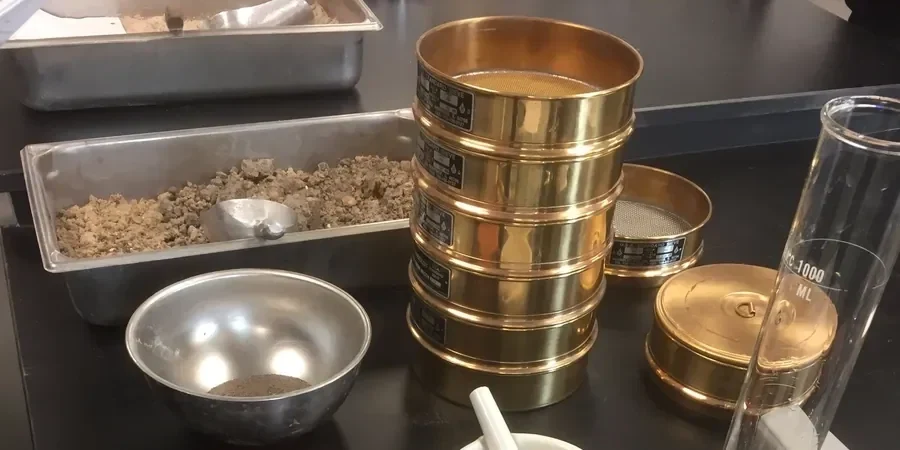
Regulatory compliance in Pasadena is governed by the California Building Code (CBC), which adopts and amends the International Building Code with state-specific seismic provisions. Chapter 18 of the CBC mandates geotechnical investigations that are consistent with the standards of the American Society for Testing and Materials (ASTM) and, for certain procedures, the California Test (CT) methods published by Caltrans. For instance, a Proctor test (Standard or Modified) must follow ASTM D698 or D1557 to establish the moisture-density relationship for engineered fill, with acceptance criteria often tied to the latest edition of the City of Pasadena’s Public Works Standards. Similarly, consolidation parameters derived from an oedometer consolidation test must comply with ASTM D2435 to accurately estimate settlement magnitudes and time rates, ensuring that new structures meet the serviceability limits outlined in the CBC.
The types of projects in Pasadena that demand these laboratory operations are wide-ranging. Hillside developments in areas like Annandale or the San Rafael Hills require residual soil characterization and direct shear testing to assess slope stability and design retaining walls. Institutional and commercial expansions at Caltech or the Pasadena Civic Center district often involve deep excavations where laboratory permeability tests inform dewatering system design. Infrastructure projects, including the Metro Gold Line extensions and City stormwater infiltration basins, rely on laboratory CBR values and consolidation data to design pavement sections and predict ground settlement. Even single-family residential additions on the city’s historic lots frequently trigger the need for basic index testing to satisfy plan check requirements, making the geotechnical laboratory an indispensable partner in Pasadena’s development lifecycle.
Available services
Atterberg limits
→ Ver detalleDirect shear test
→ Ver detalleGrain size analysis (sieve + hydrometer)
→ Ver detalleLaboratory CBR test
→ Ver detalleLaboratory permeability test (falling/constant head)
→ Ver detalleOedometer consolidation test
→ Ver detalleProctor test (Standard or Modified)
→ Ver detalleResidual soil characterization
→ Ver detalleSoil classification (USCS/AASHTO)
→ Ver detalleSoil mechanics study
→ Ver detalleCommon questions
What is the general process for submitting soil samples to a geotechnical laboratory in Pasadena?
The process begins with a qualified geotechnical engineer or geologist obtaining disturbed or undisturbed samples during a field investigation using methods like Standard Penetration Testing (SPT) or Shelby tube sampling. Samples are sealed to preserve natural moisture content, labeled with project information and depth, and transported under chain-of-custody protocols. The laboratory then logs the samples, assigns testing based on the project’s geotechnical scope, and typically provides a factual report with test results and relevant ASTM or CT method references within an agreed timeframe.
How do local soil conditions in Pasadena influence the selection of laboratory tests?
Pasadena's alluvial fans often contain coarse-grained materials requiring sieve analysis and large-scale direct shear testing, while the expansive clays from weathered formations necessitate Atterberg limits and swell-consolidation testing. The high seismicity mandates cyclic or dynamic testing for liquefaction-prone saturated sands. A site-specific laboratory program is designed after reviewing the geologic unit encountered; for instance, residual soils from the San Gabriel Mountains may require specialized characterization to distinguish their engineering behavior from transported soils.
What certifications or accreditations should a geotechnical lab in California hold?
Laboratories performing tests for projects governed by the California Building Code should be accredited to ASTM E329 and demonstrate competence through the AASHTO re:source or AMRL programs. For Caltrans-funded work, the lab must be certified by the California Department of Transportation's Independent Assurance program. Many Pasadena projects also require labs to maintain City of Los Angeles Building and Safety approval, as regional reciprocity is common. ISO/IEC 17025 accreditation is an additional credential confirming general technical competence.
How long does a typical suite of geotechnical laboratory tests take to complete?
The turnaround time depends heavily on the test types. Simple index tests like moisture content and sieve analysis can be completed within one to two days. A standard Proctor test may require three to five days due to curing and multiple compaction points. Consolidation and triaxial shear tests are time-intensive, often requiring one to two weeks because of slow drainage and staged loading. A full investigation report combining all results typically requires two to four weeks from sample receipt.