Pasadena sits at the base of the San Gabriel Mountains, where much of the surface geology consists of alluvial fan deposits from the Arroyo Seco and Eaton Canyon. These soils tend toward high plasticity clay and silty sand, which can swell, shrink, or lose bearing capacity under changing moisture. For projects on these challenging soils, we apply lime and cement stabilization to chemically alter the clay minerals, reducing plasticity index and increasing CBR values. Before we design the mix, we run basic index tests like Atterberg limits and Proctor compaction to determine the right dosage. This approach works especially well for parking lots, road subgrades, and slab-on-grade foundations in the San Gabriel Valley.
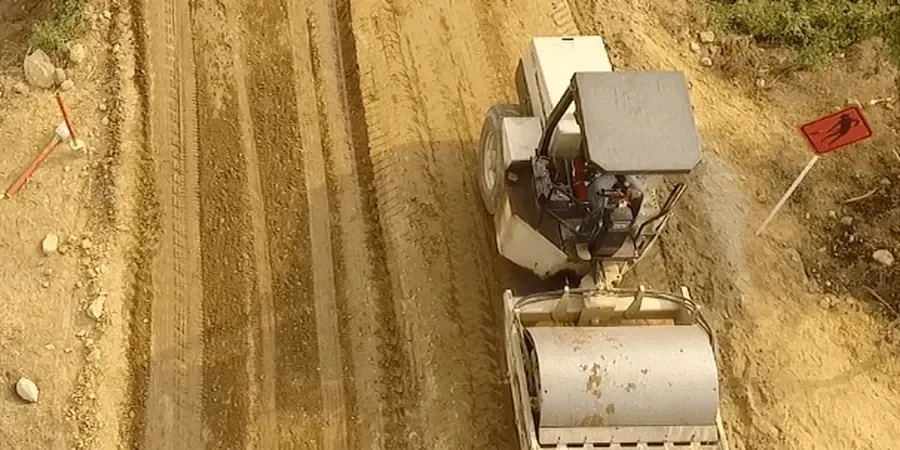
Targeting 3 to 6 percent lime by weight for clays and 4 to 8 percent cement for silty sands, based on Eades and Grim pH tests.
Service characteristics in Pasadena California
Critical ground factors in Pasadena California
The 2021 International Building Code (IBC 2021) and ASCE 7-22 require site-specific geotechnical characterization for any structure in Seismic Design Category D or E, which covers all of Pasadena. When untreated expansive soils are present, the code mandates either removal and replacement, moisture control, or chemical stabilization. Without lime or cement treatment, the cyclic swelling and shrinking can generate differential movement exceeding 1 inch, which violates IBC Table 1804.1 allowable foundation movement. We have seen slabs in older Pasadena neighborhoods crack from untreated clay beneath the stem wall, requiring costly underpinning later.
Our services
We offer two complementary stabilization operations tailored to the soil conditions you face in Pasadena California:
Lime Treatment for Expansive Clays
For CL and CH soils with PI above 20, we apply quicklime or hydrated lime at 3 to 6 percent by dry weight. The treatment reduces swell potential by 60 to 80 percent and raises the CBR from a typical 2 to over 10. We verify effectiveness with Atterberg limits and unconfined compression tests after 7 and 28 days of curing.
Cement Stabilization for Silty Sands and Low-Plasticity Soils
When the subgrade is SM, SC, or ML with PI below 15, we use Type I/II Portland cement at 4 to 8 percent. The cement bonds the particles, increasing UCS to 300–400 psi and improving modulus of subgrade reaction for pavement design. We run Proctor and CBR tests on treated samples to confirm the design mix.
Common questions
How long does lime and cement stabilization take to cure before construction can continue?
Lime-treated soil typically requires a 7-day mellowing period followed by compaction and a 7-day cure before placing the slab or pavement layer. Cement-treated soil can be compacted immediately after mixing and achieves usable strength within 3 to 7 days. We recommend 7 days of moist curing for cement stabilization to reach 70% of the target UCS.
What is the cost range for lime and cement stabilization in Pasadena California?
For a typical residential or commercial lot, the cost ranges between US$730 and US$2,410 depending on treatment depth, dosage, and total volume. The final price depends on the soil test results, access conditions, and whether you need lime or cement — lime is usually slightly cheaper but requires more curing time.
Can stabilization be applied to existing slabs or pavements that are already cracking?
No, lime and cement stabilization must be performed on the subgrade before the slab or pavement is placed. If you already have cracking, we recommend a slab jacking or underpinning evaluation. For new construction, we treat the soil during the earthwork phase, mixing the additive into the top 12 to 18 inches and recompacting it.
Does stabilization work on all clay types found in Pasadena?
It works well on most CL and CH clays, but highly organic soils (OH) or soils with more than 2% sulfates may require special testing. Sulfate attack can cause heave in lime-treated soils. We always run a soluble sulfate test (ASTM C1580) first. If sulfates exceed 0.3%, we recommend cement with sulfate-resistant properties or alternative methods.