A portable seismometer sits on the ground for about 30 minutes. It records ambient vibrations from wind, traffic, and distant earthquakes. This is the HVSR microtremor survey (Nakamura method) in Pasadena California. The equipment is lightweight and requires no drilling. The field crew places the sensor directly on soil or pavement. The goal is to capture the horizontal-to-vertical spectral ratio. This ratio reveals the fundamental resonance frequency of the site. In Pasadena California, the deep alluvial basin amplifies long-period waves. The HVSR survey identifies that frequency without boring. It is a fast, non-invasive reconnaissance tool. The results guide whether deeper MASW-Vs30 profiling is needed for final design.
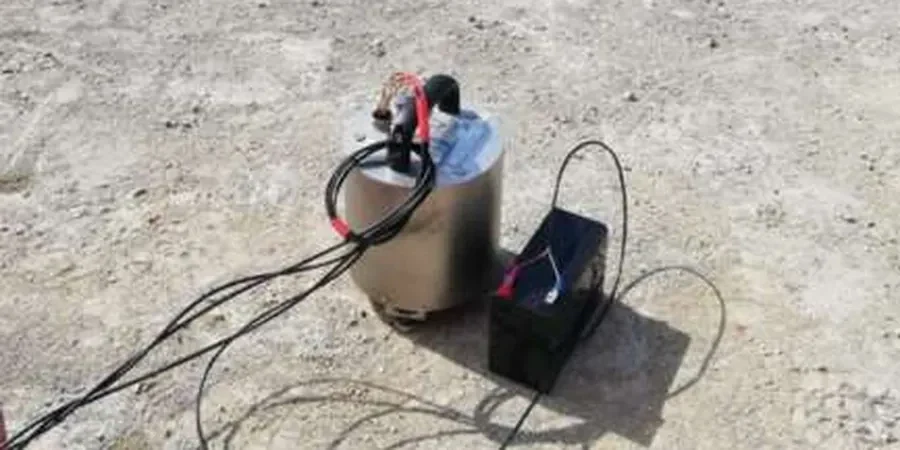
A 30-minute surface measurement reveals the resonance frequency of a 300-meter-deep alluvial basin. No drilling required.
Service characteristics in Pasadena California
Critical ground factors in Pasadena California
A common mistake in Pasadena California is skipping site-specific resonance measurements for low-to-mid-rise buildings. Engineers sometimes rely only on Vs30 from regional maps. But the Raymond Basin produces local amplification patterns that maps miss. Without an HVSR microtremor survey (Nakamura method) in Pasadena California, the design may not account for resonance at the building's natural period. That mismatch can double seismic demands during an earthquake. The result is either an over-conservative (costly) design or an under-designed structure. The survey costs a fraction of a borehole and removes that guesswork.
This service complements our laboratory testing work for a complete project analysis.
Our services
The team offers three standard HVSR service levels tailored to Pasadena California project needs.
Single-Station HVSR
One 30-minute recording at the project location. Delivers f0 and A0 values. Ideal for preliminary site screening and low-budget residential projects.
Array HVSR (2D Profile)
Multiple stations along a line to map lateral variations. Used for larger developments or when the basin geometry is unknown. Provides a 2D resonance map.
HVSR + MASW Combined Survey
Integrates HVSR resonance data with active MASW Vs30 profiling. Delivers both f0 and shear-wave velocity. Required for detailed site classification under ASCE 7.
Common questions
What does HVSR stand for and how does the Nakamura method work?
HVSR stands for Horizontal-to-Vertical Spectral Ratio. The Nakamura method compares the horizontal and vertical components of ambient vibrations. The ratio peaks at the site's fundamental resonance frequency (f0). A high peak indicates strong soil amplification.
How much does an HVSR microtremor survey cost in Pasadena California?
A standard single-station HVSR survey in Pasadena California typically costs between US$1,680 and US$2,820. The final price depends on the number of stations and site access conditions. Volume discounts apply for multi-station arrays.
What is the typical resonance frequency for sites in Pasadena California?
Most sites in the Pasadena California area show fundamental frequencies between 0.5 Hz and 3 Hz. Sites near the Raymond Basin center tend toward 0.5 Hz to 1 Hz. Hillside sites on bedrock can exceed 5 Hz.
Is an HVSR survey sufficient for seismic site classification under the IBC?
No. The IBC requires Vs30 for site class (A through F). HVSR alone gives f0 but not shear-wave velocity. You need a combined HVSR + MASW survey to meet ASCE 7 and IBC requirements.
How long does field work take and when do we get results?
Field work takes about 30 minutes per station plus setup. For a typical single-station job, total field time is under an hour. A preliminary result is available within 24 hours. The full report with interpretation takes 3 to 5 business days.